Introduction
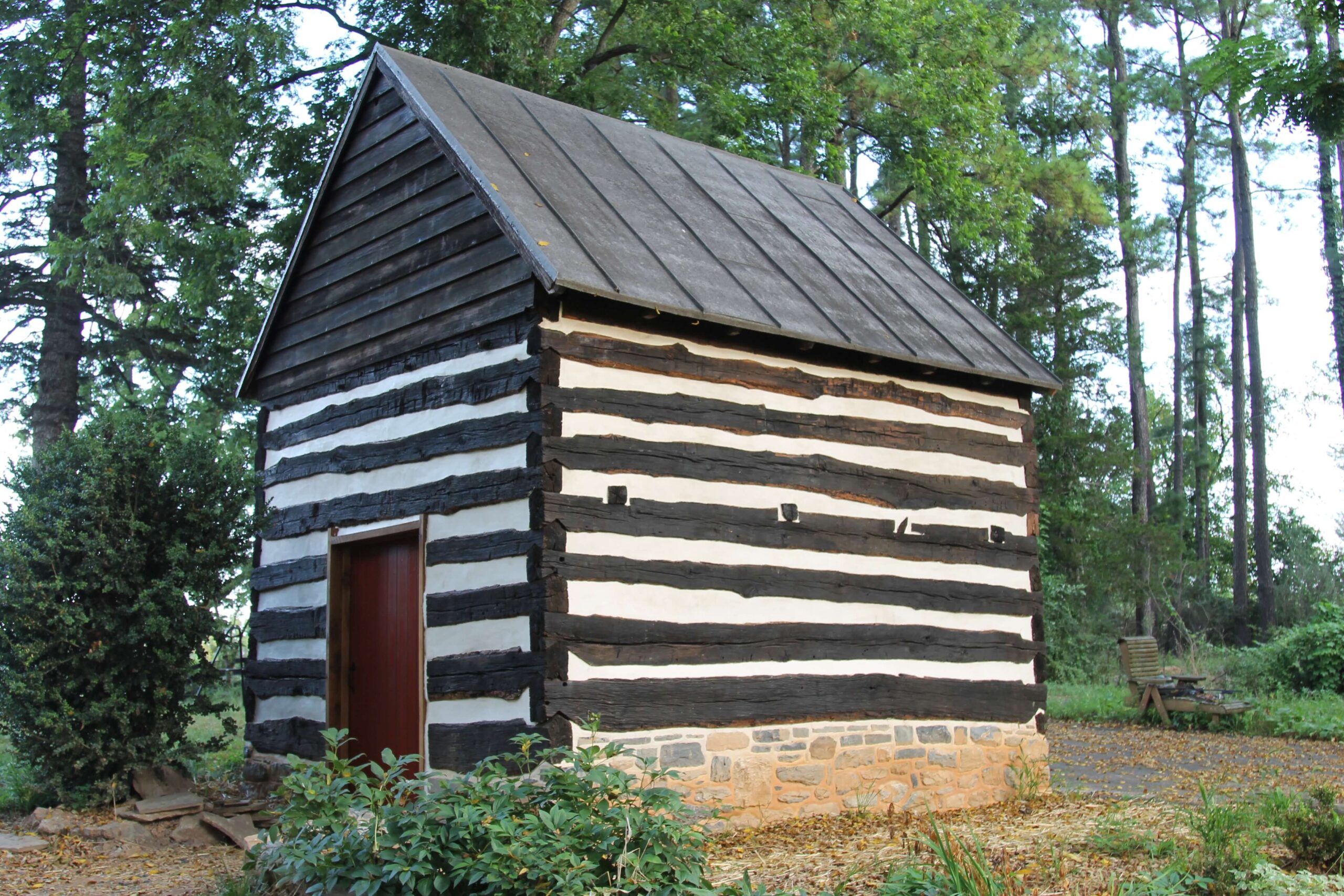
Renovating a log cabin is both an involved and deeply rewarding process. This particular cabin, located in Clarke County, Virginia, is difficult to date precisely. Based on the wood quality and workmanship, we estimate its construction to be mid-19th century or earlier.
Existing Conditions
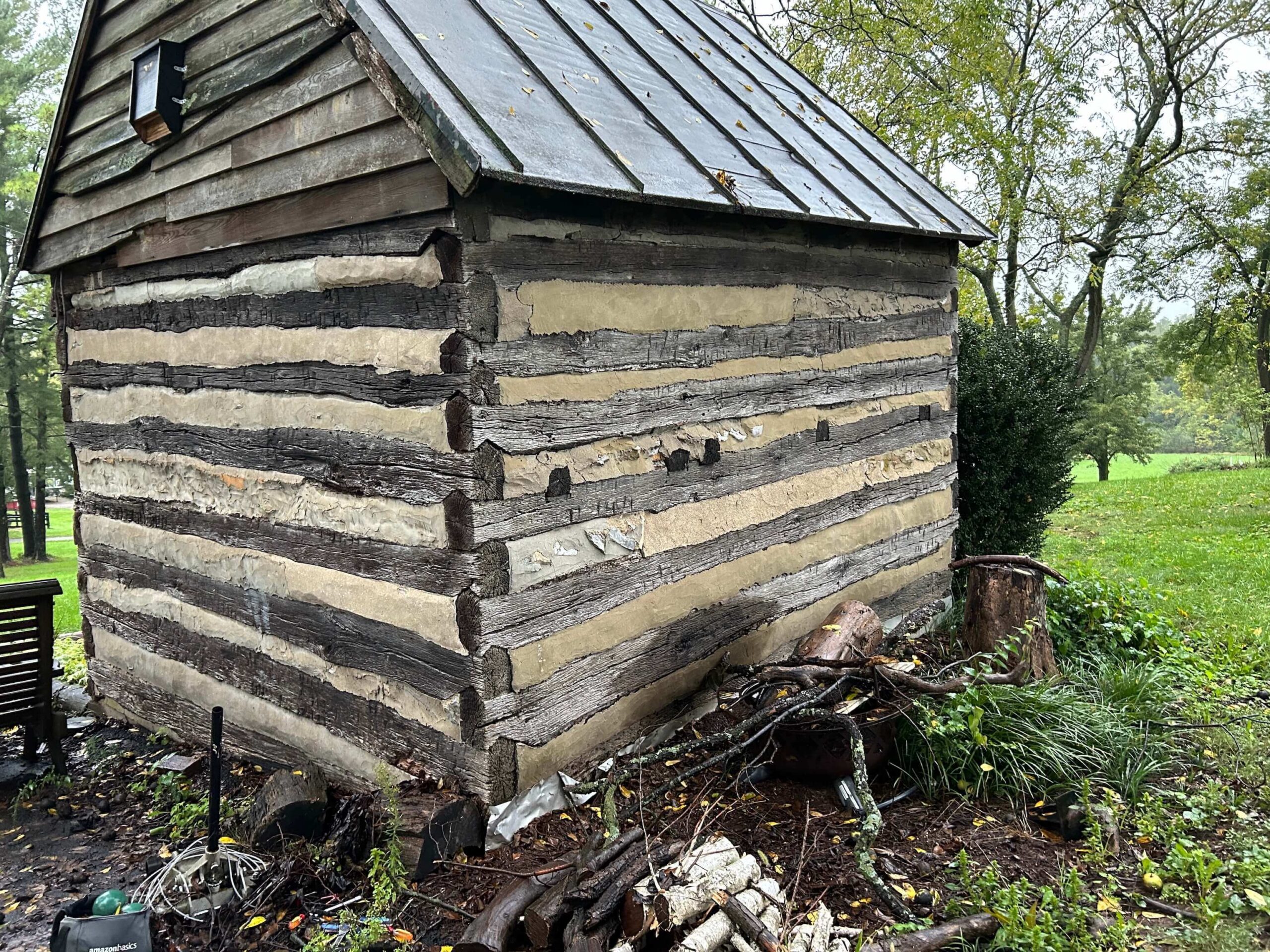
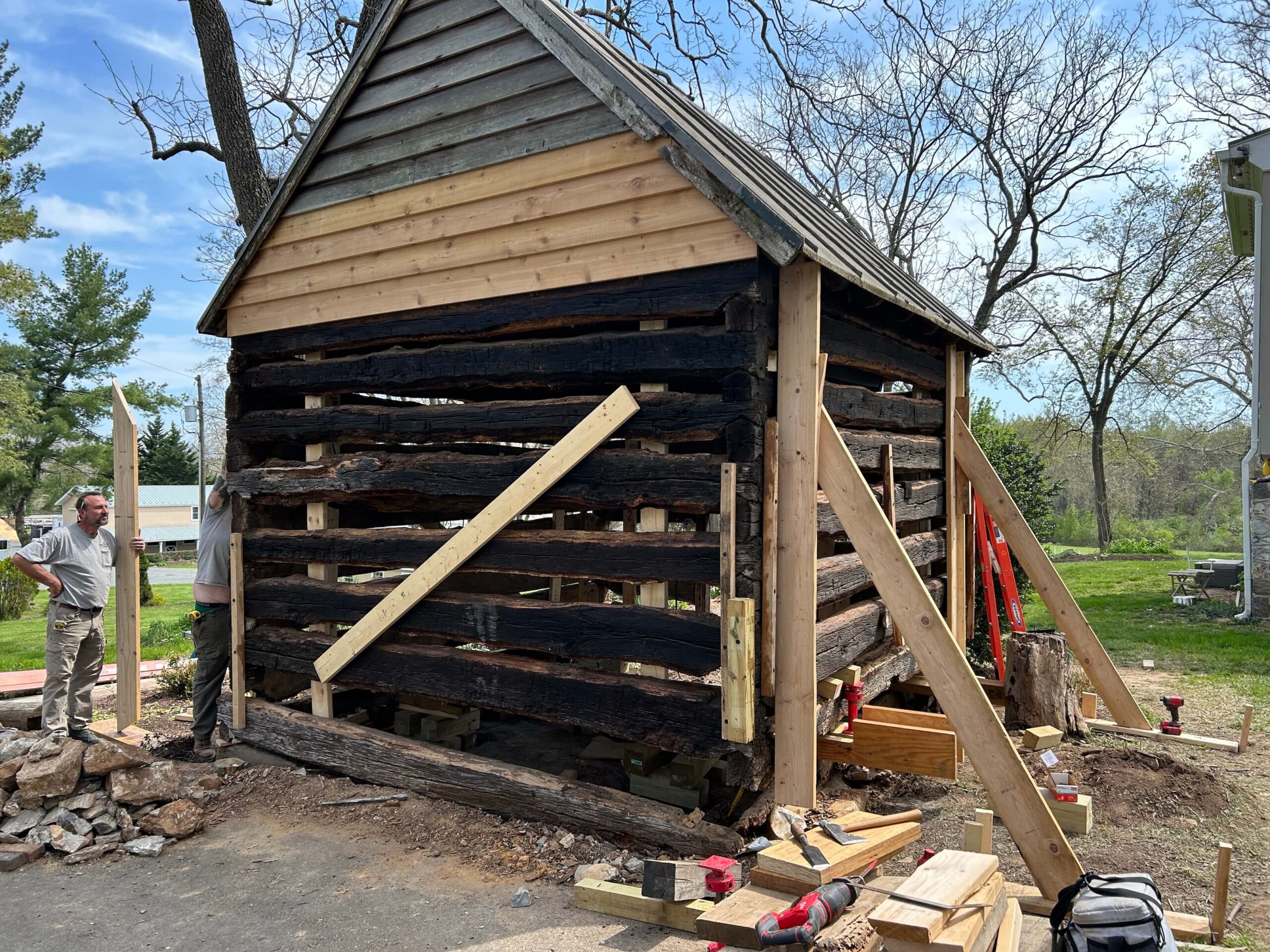
At the outset, the overall quality of the logs was very good; I think that they were mostly chestnut or oak. There was no widespread or systemic decay; deterioration was limited primarily to the lower courses where the logs were at—or below—ground level. Over time, rot at one corner caused the structure to subside, resulting in a noticeable lean.
A second major issue was the daubing—the mortar applied between the logs. In this case, a modern Portland cement had been used. Portland cement is incompatible with historic log construction: it traps moisture, is not vapor-permeable, and lacks flexibility. Compounding the problem, the daubing had been applied flush with, and in some areas proud of, the log faces. We see a lot of damage caused to historic cabins because of Portland cement. When used with lower quality logs like pine, the rot can be widespread.
Project Goals
Our goals for the project were straightforward and conservative:
- Lift the cabin to restore a healthy distance between wood and soil, a minimum of 8 inches.
- Repair deteriorated bottom logs that have suffered from decay.
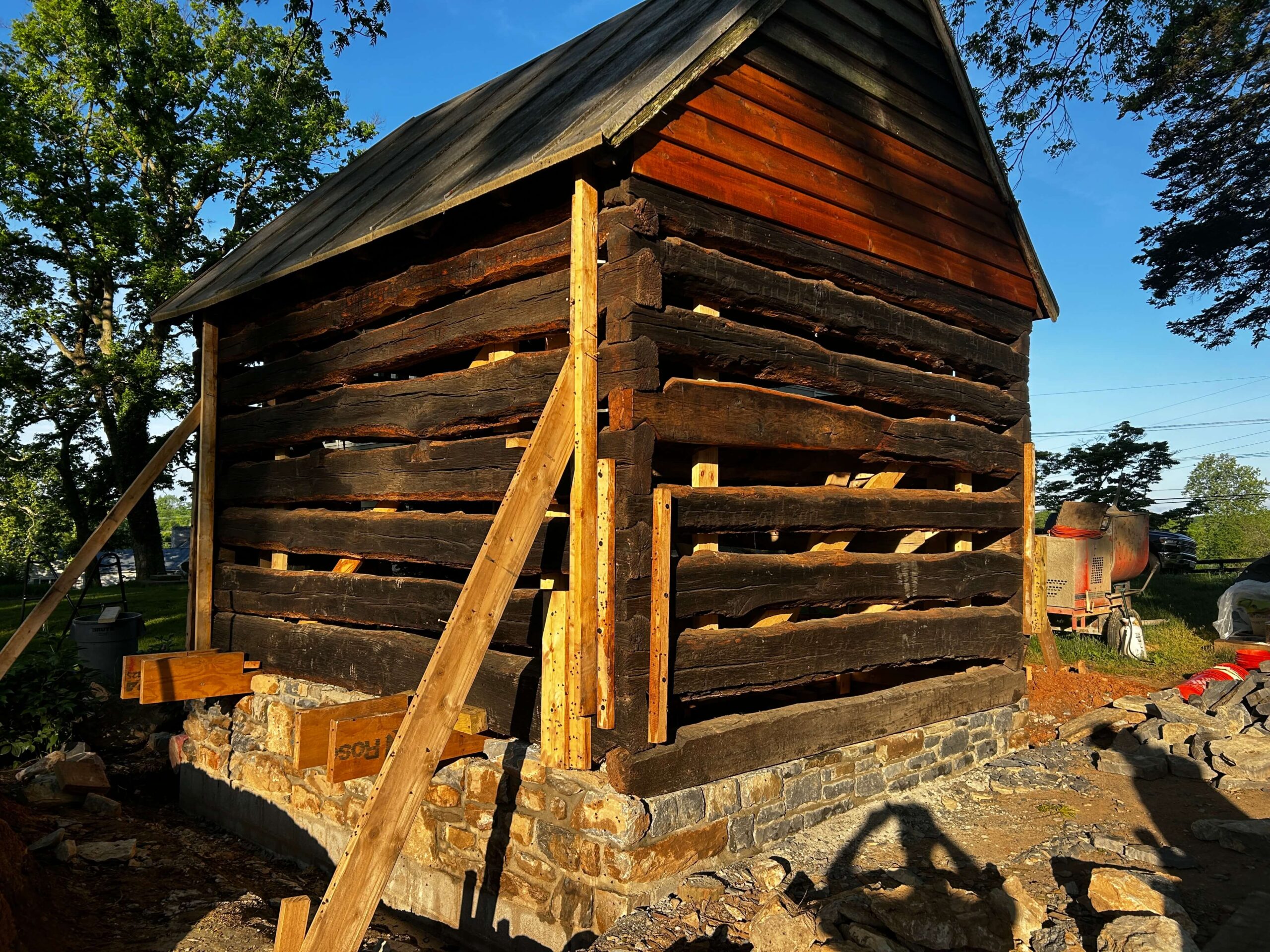
- Construct a proper stone foundation.
- Treat the logs and reinstall chinking and daubing using traditional, breathable materials.
Demolition and Lifting
The first step was selective demolition. To correct the settled corner, the cabin needed to be lifted and slightly twisted as it was raised. With the existing cement-based chinking in place, the building behaved as a rigid frame. Removing the chinking and daubing allowed the structure to be adjusted and also provided full access to the logs for repair and treatment.
Lifting a historic structure is always a tense process. The building has settled into its position over decades, and the inevitable groaning and popping is stressful even with experience. This work is done slowly, over several days, with the goal of achieving a visually level structure while minimizing stress on the logs.
New Stone Foundation
Once the cabin was stabilized at the correct height, a new stone foundation was constructed beneath it. This phase is particularly challenging, as temporary support beams remain in place while excavation and masonry work occur directly under the building walls. Careful sequencing and constant monitoring are essential.
Chinking and Daubing
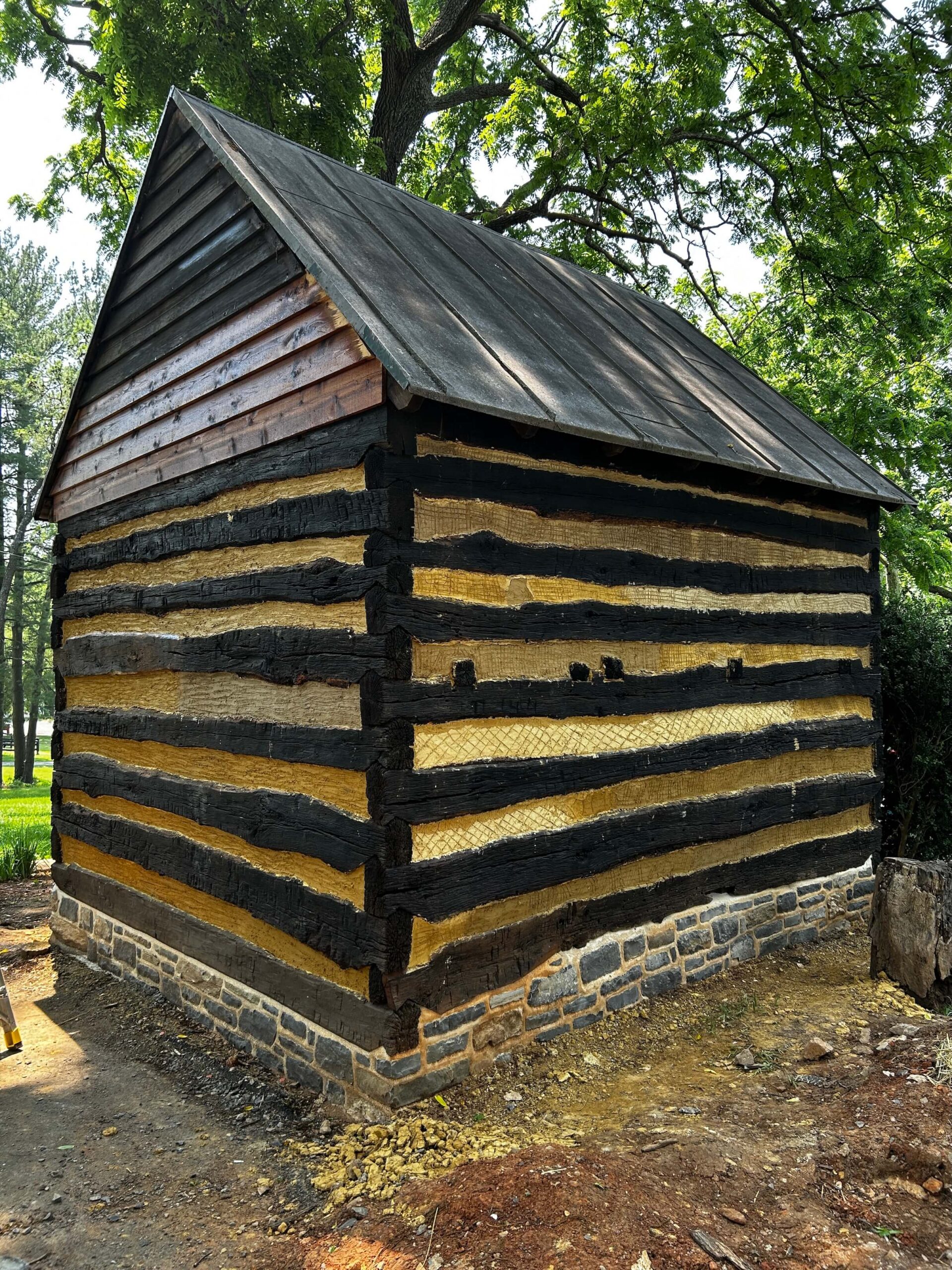
For the chinking, we selected a fiberglass mesh system. While wood or stone infill would be the most historically pure approach, the mesh is fully concealed in the finished work, performs well, does not rust, and offers meaningful cost savings.
Traditional Daubing Materials
For the scratch and brown coats, we used a mixture of sand, clay, straw, and lime mortar—a traditional cob-like material strengthened with lime. Two coats are applied.
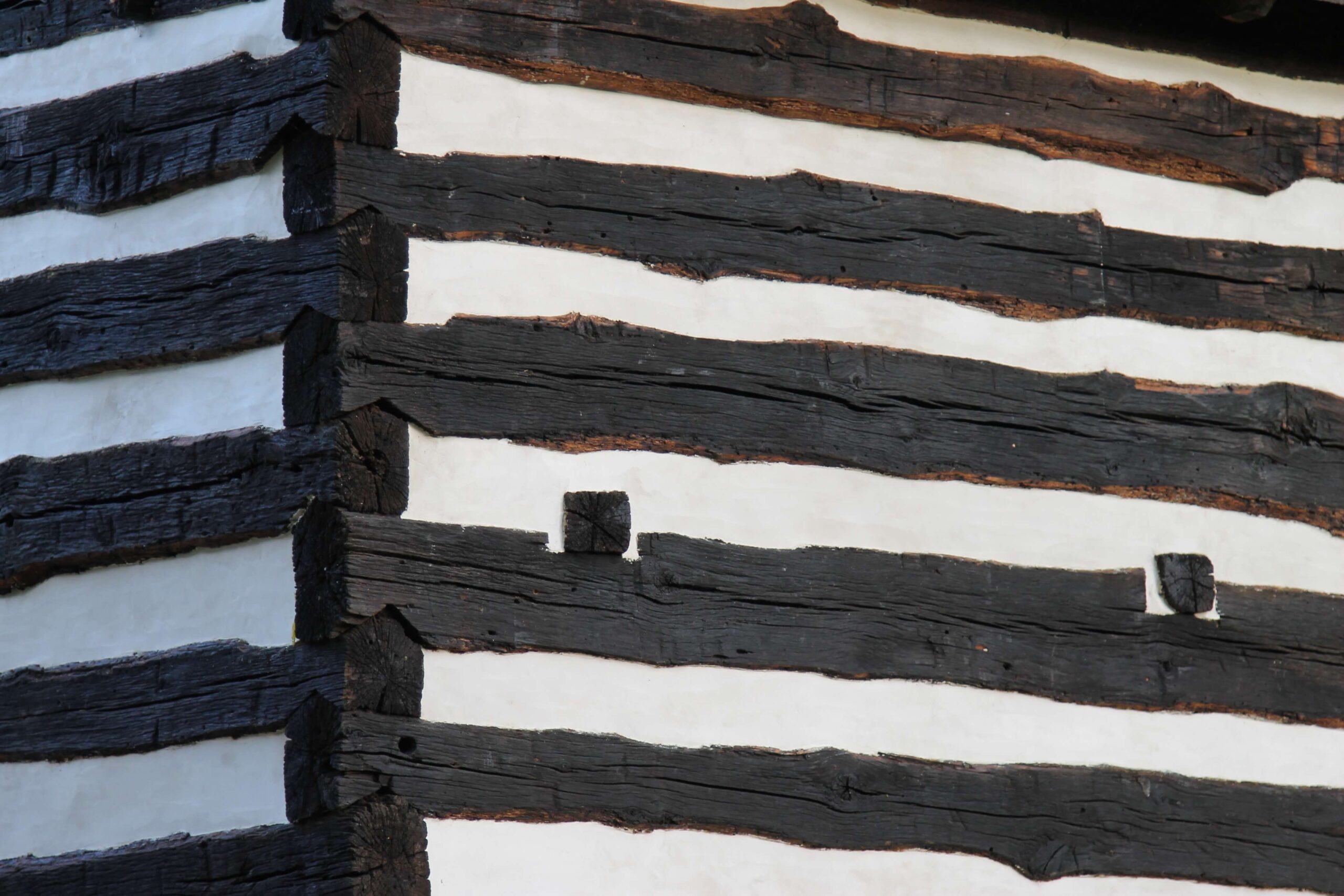
The final coat is a true lime mortar: lime putty mixed with sand. Lime mortar is vapor-permeable, flexible, and self-healing. It was used extensively by historic cultures and is once again being widely understood and appreciated thanks to modern lime producers and researchers. It is a brilliant human discovery.
Completed Work
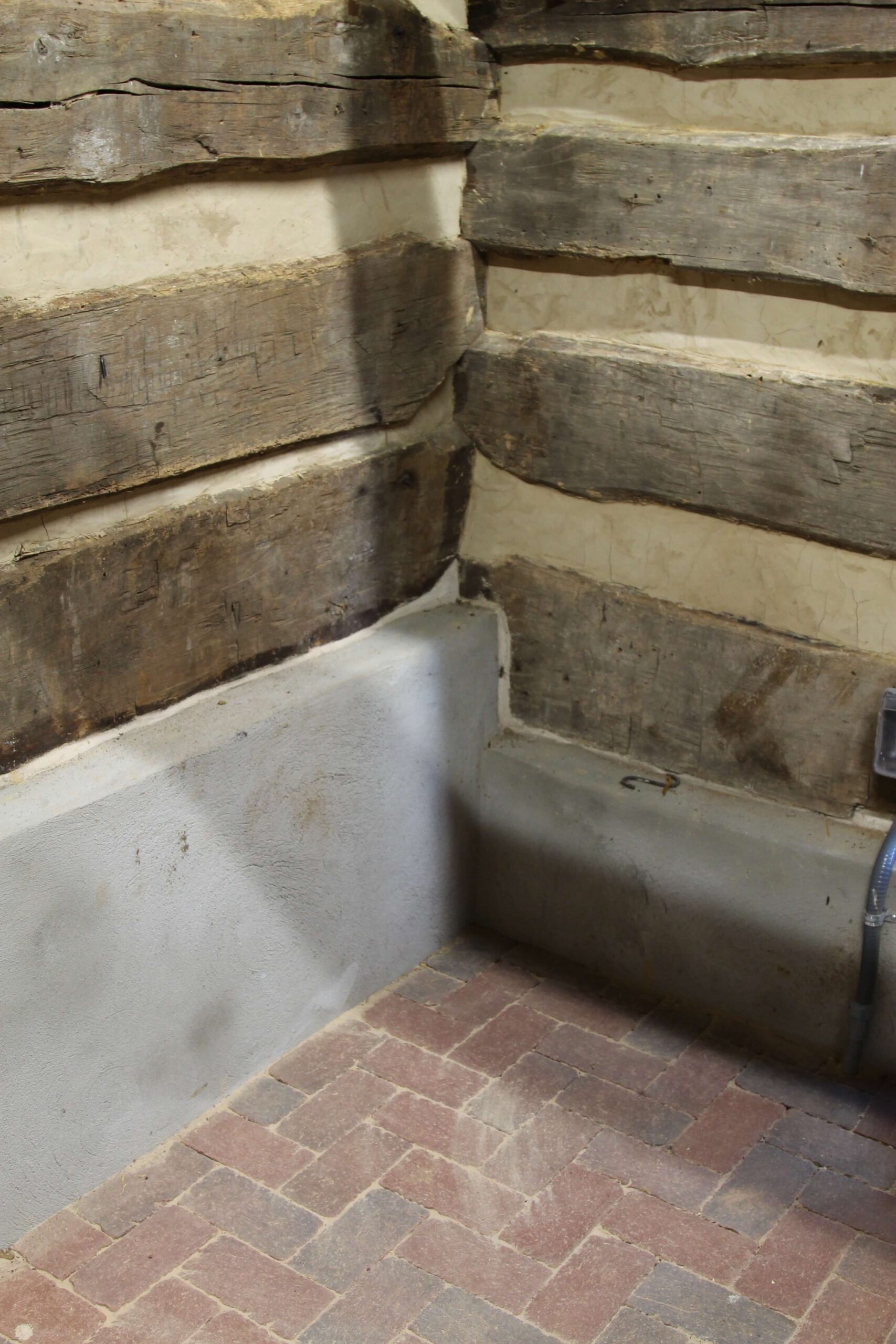
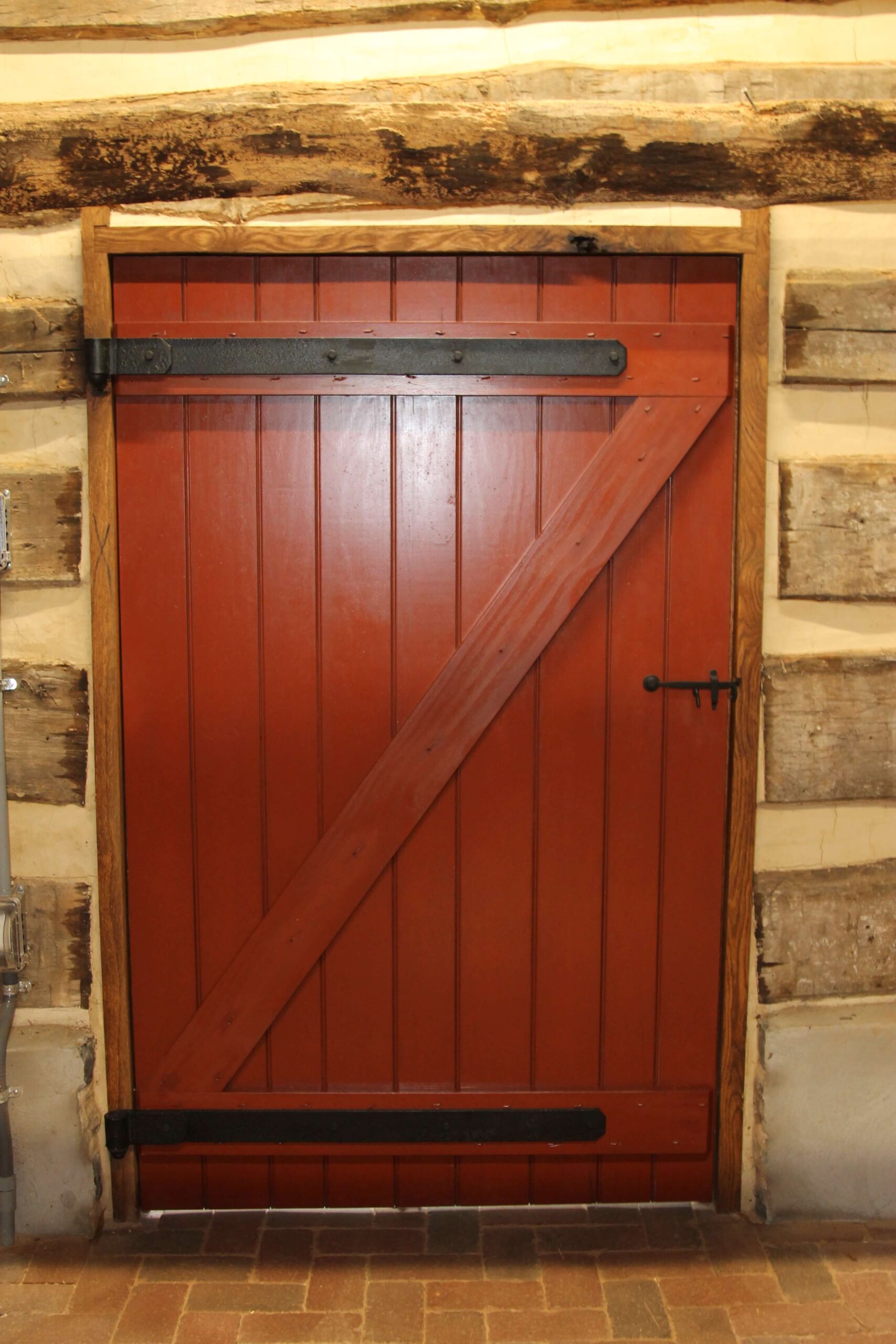
In addition to the exterior work, we installed a dry-laid brick floor in a herringbone pattern at the interior. The completed building is now structurally sound, breathable, and properly detailed for long-term survival. For the log treatment we applied pine tar mixed with linseed oil before the daubing step to keep it clean. The pine tar acts as a pigment to protect the wood and oil from uv damage, and it is also a wood preservative. The door is traditional Ottosson linseed oil paint with red oxide pigment. (solventfreepaint.com)